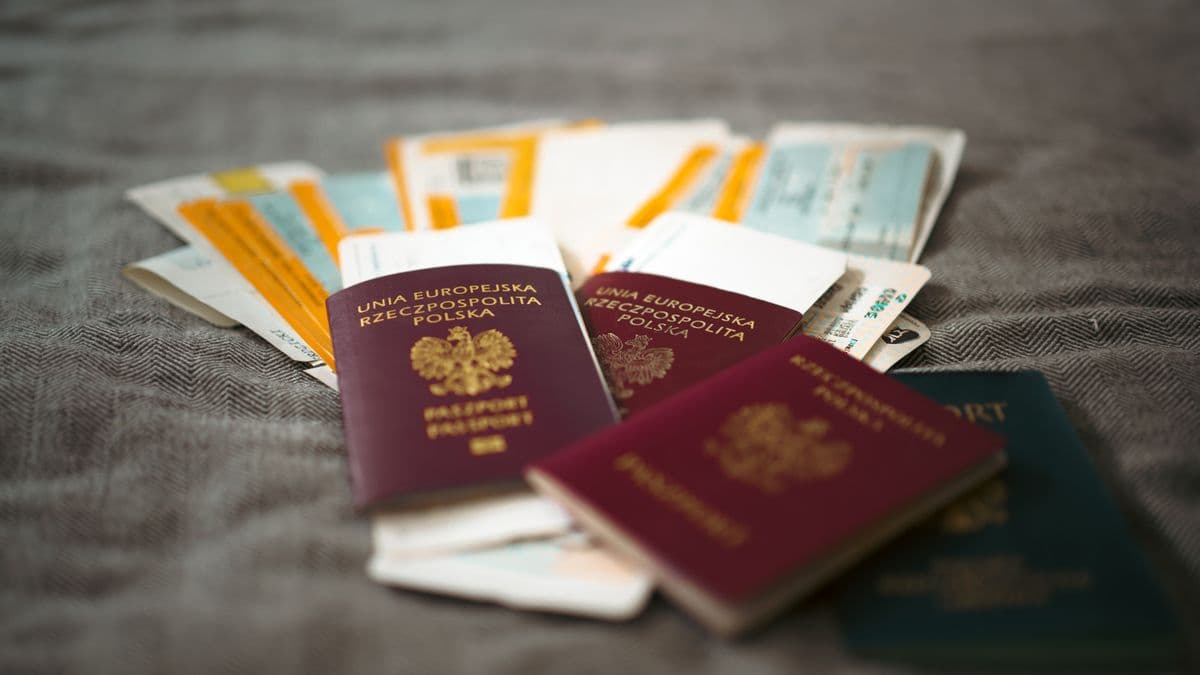
To board any domestic flight from John F. Kennedy International Airport in 2026, you need a REAL ID-compliant driver's license (the one with a star in the corner) or another TSA-accepted ID such as a U.S. passport. If you reach the checkpoint without one, you can still fly, but you will be sent through the new $45 TSA ConfirmID identity check and should plan for an extra 30 minutes or more. Flying internationally out of JFK? Your passport already covers you, so the REAL ID rule changes nothing for that trip.
Here is exactly what JFK's terminals accept at the checkpoint this year, what the ConfirmID process looks like, and the ID mistakes that slow people down most.
What counts as a REAL ID at JFK security in 2026?
Since May 7, 2025, a standard state license that is not REAL ID-compliant no longer works as airport ID. The fix is small but easy to miss: look at the top of your license for a star. A gold or black star in the upper corner means the card is REAL ID-compliant. No star means it is not, even if the license is brand new and unexpired.
A REAL ID license is not your only option. TSA accepts several other documents at every JFK checkpoint, and any one of them lets you skip the star question entirely:
- U.S. passport or passport card. The simplest backup if your license has no star.
- Enhanced Driver's License (EDL). Issued by a few states and accepted on its own.
- DHS Trusted Traveler card: Global Entry, NEXUS, SENTRI, or FAST.
- U.S. military ID, including cards issued to dependents.
- Permanent resident card or a photo ID from a federally recognized Tribal Nation.
You can confirm the full accepted list on the TSA identification page. The rule applies to every passenger 18 and older. Children under 18 do not need their own ID for a domestic flight when they travel with a companion, which catches out a lot of families who assume a kid needs a card too.
What happens if you show up at JFK without a REAL ID?
You will not be turned away on the spot, but the day gets longer. As of February 1, 2026, a traveler who cannot show an accepted ID at a TSA checkpoint can pay a $45 fee for TSA ConfirmID, an identity-verification process that covers a 10-day travel window. TSA warns that this extra screening can add 30 minutes or more to your time at the checkpoint. Officers verify your identity by asking questions drawn from public and commercial records, so bringing a secondary document such as a Social Security card or a credit card in your name can help the check go faster.
At JFK that half hour lands at the worst possible moment. The morning international departure banks out of Terminal 4 and Terminal 1 already push security lines to their limit, and a ConfirmID check on top of a peak queue is how people miss boarding. ConfirmID is also not guaranteed: if officers cannot verify your identity, you do not fly. Treat it as a safety net, not a plan.
If you know your license has no star and you cannot get a passport in time, build the buffer into your morning. The TSA REAL ID page explains who is affected, and pairing that with a realistic arrival time keeps a paperwork problem from turning into a missed flight.
REAL ID vs. passport vs. Global Entry for JFK travelers
All three get you through the checkpoint, but they fit different travelers.
A REAL ID license is the cheapest path if you only fly domestically. You renew it once at your state DMV and never think about it again. The catch is the DMV trip itself, which can mean a document checklist and a wait. Not every state issues the Enhanced Driver's License version, so if yours does not, the plain REAL ID with the star is the one to request.
A U.S. passport is the strongest single document, because it works for both domestic and international flights out of JFK. If you go abroad even once a year, your passport already does the job and you can ignore the license star question.
A Global Entry card is the frequent-flyer pick. It counts as an accepted ID at the checkpoint and doubles as proof for expedited screening. It also speeds up customs when you land back at JFK from overseas. You apply through U.S. Customs and Border Protection's Trusted Traveler Programs. For someone flying through JFK every month, the time saved at both security and arrivals usually outweighs the application cost.
How early should you arrive at JFK with the new ID rules?
The old advice still holds: about 2 hours before a domestic flight and 3 hours before an international one. The new rule just removes your margin for error. If there is any chance you will need ConfirmID, add the 30-plus minutes on top, which in practice means arriving closer to 2.5 hours for a domestic departure. JFK handles more international passengers than any other U.S. airport, so its checkpoint lines rarely move fast during the morning and early-evening peaks.
Getting to the airport on time matters as much as the ID in your pocket. JFK sits about 15 miles (24 km) from Midtown Manhattan, and traffic on the Van Wyck Expressway swings widely by time of day. If you have already lost time sorting out a license issue, you do not want to gamble on a slow ride too. A pre-booked private transfer through GetTransfer.com gives you a fixed pickup time and a known arrival, so the ID desk is the only variable left in your morning.
For the full timing breakdown, see our guide on how early to arrive at JFK for domestic flights and the companion piece on optimal arrival time for international flights.
Common REAL ID mistakes that slow travelers down at JFK
The same handful of errors show up at the checkpoint again and again, and each one is easy to avoid once you know it.
Assuming a new license is automatically a REAL ID. It is not. A 2026 license can still lack the star if you renewed by mail without submitting the extra documents. Check for the star now, not at the terminal.
Thinking you need a REAL ID to fly abroad. You do not. International flights from JFK require a passport, and a passport already satisfies the domestic rule too, so there is nothing extra to get.
Packing the passport in a checked bag. If your license has no star, your passport is your only accepted ID. It belongs in your carry-on, not in luggage you hand over at the counter.
Bringing a long-expired ID. TSA can accept a state license up to a year past its expiration date, but anything older sends you to identity verification. If your renewal date is close, handle it before you fly.
Before you head out, you can also speed up the rest of your checkpoint with our tips on how to pass TSA security quickly. The REAL ID rule rewards one small action: check your license for the star today. If it is there, you are set for JFK. If it is not, grab your passport or book a DMV visit before your next trip, and the $45 ConfirmID line stays someone else's problem.
Related guide: JFK Customs & Immigration — entering the US: CBP, Global Entry and customs limits.